
Description
What Is Chocolate Krinkle Brain?
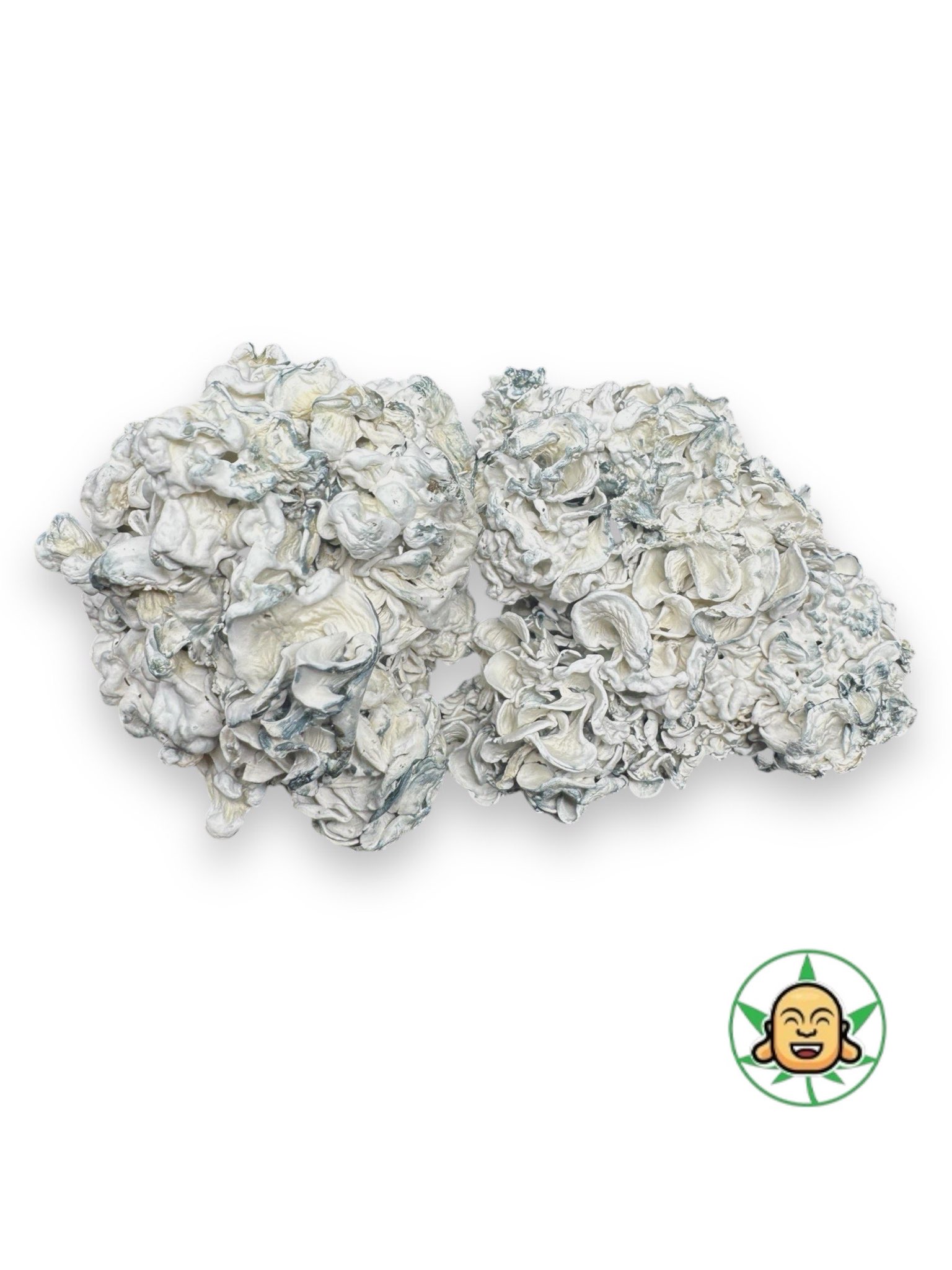
Chocolate Krinkle Brain is a nickname used for a distinctive Psilocybe cubensis variety recognized for its unusual appearance. Like many cultivated mushroom varieties, it has been selectively developed to emphasize unique physical traits while remaining part of the broader Psilocybe cubensis species.
Its appearance often includes:
Dense fruiting bodies
Thick stems
Rounded caps
Distinctive wrinkled or folded cap development
Noticeable blue bruising when handled
Physical characteristics can vary depending on genetics and cultivation conditions.
Taxonomy and Classification
Chocolate Krinkle Brain belongs to the fungal kingdom.
Scientific classification includes:
Kingdom: Fungi
Division: Basidiomycota
Class: Agaricomycetes
Order: Agaricales
Family: Hymenogastraceae
Genus: Psilocybe
Species: Psilocybe cubensis
Understanding taxonomy helps distinguish mushroom species and explains relationships among cultivated varieties.
Morphological Characteristics
Mycologists often identify mushrooms using visible characteristics.
Chocolate Krinkle Brain may display:
Thick stems
Compact structure
Curled or wrinkled caps
Dark spore coloration
Blue bruising after handling
Environmental conditions can influence size, shape, and coloration.
Understanding Mushroom Genetics
Modern mushroom cultivation often involves selecting genetic traits that produce consistent growth and distinctive morphology.
Common breeding goals include:
Stable fruiting
Uniform growth
Dense mushroom development
Unique appearance
Healthy mycelial growth
Genetics play a major role in the diversity seen among cultivated mushroom varieties.
Life Cycle of Psilocybe Mushrooms
Like many fungi, Psilocybe mushrooms develop through several stages:
Spore germination
Mycelium growth
Colonization
Primordia formation
Fruiting body development
Spore production
Each stage depends on suitable environmental conditions.
Storage and Preservation
Proper storage helps preserve mushroom quality for scientific collections and educational specimens.
General recommendations include:
Cool storage conditions
Dry environments
Protection from excess moisture
Airtight containers when appropriate
Minimal exposure to direct sunlight
Storage methods vary depending on whether specimens are fresh or dried.
Why Mushroom Education Matters
Fungi play essential roles in nature by recycling organic matter, forming relationships with plants, and supporting healthy ecosystems. Learning about mushroom biology helps people better understand biodiversity, fungal evolution, and ecological balance.
Educational topics include:
Mushroom anatomy
Taxonomy
Mycology
Fungal genetics
Ecology
Responsible identification
Frequently Asked Questions
What is Chocolate Krinkle Brain?
Chocolate Krinkle Brain is a nickname for a distinctive variety of Psilocybe cubensis recognized for its unusual cap appearance and thick fruiting bodies.
What species does it belong to?
It belongs to the species Psilocybe cubensis.
Why do some mushrooms bruise blue?
Blue bruising is a well-known characteristic of many Psilocybe mushrooms and results from chemical reactions within the mushroom tissue after handling or damage.
Why is taxonomy important?
Taxonomy helps scientists classify organisms, identify species, and understand evolutionary relationships.
What is mycology?
Mycology is the scientific study of fungi, including mushrooms, molds, yeasts, and their ecological roles.
Where can I learn more?
At BuddhaBrosL, we provide educational resources covering cannabis science, mushroom biology, cultivation concepts, plant genetics, and natural product education.
Conclusion
Chocolate Krinkle Brain highlights the diversity found within cultivated Psilocybe cubensis varieties. From its distinctive appearance to its place within fungal taxonomy, it serves as an interesting subject for mycology enthusiasts and students of mushroom biology. Through education, readers can better understand fungal genetics, morphology, and the remarkable diversity of the fungal kingdom.


Reviews
There are no reviews yet.